You’re on the practice green, trying to roll five-footer after five-footer. The read feels fine. Your speed is close. And yet the ball keeps leaking right… then the next one snaps left because you “fixed” it with your hands.
If you’ve lived in that loop, the zero torque putter trend makes immediate emotional sense. It promises a calmer face, less manipulation, and a start line you can trust.
But now that the novelty has worn off, the real question is simpler: are zero torque putters worth it? Specifically for you, on your greens, with your stroke?
A lot of the noise comes from the fact that “zero torque” is not one single design, and it’s not a magic on/off switch for better putting. Some golfers roll it beautifully on day one. Others get worse, usually for predictable reasons: fit, aim, or a mismatch between what they feel and what the putter wants to do.
In this guide, we’ll strip it down to plain English. You’ll learn what these putters actually change, who tends to benefit, where the common pitfalls show up, and a practical way to test one before you spend.
If you pick the right model and get the setup right, a zero torque putter can feel like someone turned the volume down on your hands. If you buy one on hype and hope, it can turn a small miss into a stubborn pattern.
Let’s make it a smart decision.
What “Zero Torque” Means in a Putter (Plain English)
A zero torque putter is designed to resist twisting open or closed when you swing it. The goal is simple: keep the face more stable so your start line is easier to repeat.
The confusing part is the label. In the real world, you’ll also hear:
- low torque putter
- lie-angle-balanced putter (often associated with L.A.B. Golf)
- toe-up putter / toe-up balance
- “Square to square” (Odyssey’s phrasing)
They’re all pointing at the same idea: reduce the putter head’s urge to rotate during the stroke.
Torque vs face rotation: the problem these putters try to solve
When you swing a traditional putter, the head has a natural tendency to rotate because of how its center of gravity (CG) sits relative to the shaft.
If the face wants to open on the way back and close through impact, your hands typically do one of two things:
- Let it happen, then time the face back to square.
- Fight it, steering the face to stay square.
Neither is “wrong.” Plenty of great putters use rotation. The issue is consistency under pressure, on short putts, or when tension creeps into your wrists.
Zero/low torque designs try to reduce the amount of face rotation you have to manage.
Zero torque vs “face-balanced” vs toe-hang (why they’re not the same)
This is where a lot of golfers get misled.
- Toe-hang describes how the putter hangs when balanced on a finger. More toe-hang generally encourages more natural rotation (often paired with arcing strokes).
- Face-balanced means the face points upward in that balance test, which usually reduces rotation compared to toe-hang.
But “face-balanced” does not automatically mean “zero torque.”
Many face-balanced putters still want to twist during the stroke because the CG and shaft axis relationship is not the same thing as that simple balance test. Zero torque is trying to address twisting during motion, not just how it sits when static.
“Lie Angle Balance” (L.A.B.) vs other zero-torque approaches
Lie Angle Balance (LAB) is one of the best-known expressions of the concept. The short version: the head is built and weighted so that when the putter is set at your lie angle, it wants to stay square to the stroke plane.
Other brands chase similar stability with different geometry, shafting, and weighting choices (for example, “toe-up” designs or “Square 2 Square” style builds). The effect can be similar, but the feel and setup demands can be very different.
If you want a broad, brand-agnostic overview of the category, this explainer from GOLF.com is a helpful starting point: Zero/low torque putters: everything you need to know.
Why the Hype Happened (and Why It Cooled)
The hype happened because the problem is real: face control is hard, and it gets harder when you care.
A lot of golfers don’t need more technique tips. They need a setup that reduces the urge to “save” the putt with their hands.
Then reality set in. Not because the concept is fake, but because:
- Some people aim them poorly.
- Some people fit them poorly (especially lie angle and loft).
- Some people hate the look or sound and never commit.
- Some strokes rely on a natural release feel, and “staying square” feels robotic.
That’s why you’ll see passionate “this changed my putting” reviews right next to “I pushed everything for two weeks” stories.
If you want to see that push-pull in the broader gear conversation, This MyGolfSpy’s opinion piece captures the tension between promise and fit nicely.
Are Zero Torque Putters Still Worth It in 2026? (Decision Framework)
A good way to decide is to separate performance need from curiosity.
If you’re mostly curious, a demo might satisfy you without a purchase. If you have a repeatable problem that matches what these putters solve, they’re still very much “worth it.”
Worth it if you struggle with: pushes/pulls, face control, tension/yips
Zero torque tends to be worth investigating if you regularly experience:
- Start line misses (pushes and pulls) that don’t match your read
- A sense that you have to “do something” with your hands to square the face
- Short-putt anxiety where your stroke gets jabby or wristy
- A yips-like pattern where the face feels unreliable
It’s not uncommon to hear the claim that tiny face errors have big consequences. For example, Evnroll notes that a 1° face misalignment can cause a miss on a 10‑foot putt in its zero-torque education materials: Evnroll ZERO / ZeroTorque collection. (The exact miss distance depends on speed, break, and impact dynamics, but the takeaway is direction matters fast.)
Probably not worth it if you already putt well (or love toe-release feel)
These putters can also be a step sideways or backward if:
- Putting is already a strength and your misses are mostly pace/read
- You love the feeling of the toe releasing and you start “holding off” the face
- You aim traditional shapes well, but struggle aiming “toe-up” or high-MOI mallets
- You play very fast greens and rely on delicate face-feel feedback
In other words, “zero torque” isn’t automatically better. It’s a different tool.
How long it takes to adapt (what reviewers say to expect)
The most realistic adaptation window is not one practice session. It’s usually:
- A few days to stop fighting the face behavior
- 1–3 weeks to get speed control and start-line trust syncing up
- Longer if the putter is misfit (because you’re practicing a compensation)
Who Benefits Most (Stroke & Miss Patterns)
Most golfers ask, “Do I need a straight-back-straight-through stroke for this to work?”
You don’t need a perfect SBST stroke. But your tendencies matter.
Straight-back-straight-through vs arcing strokes: what tends to fit
In broad terms:
- If your natural motion is straighter and you dislike face rotation, zero torque can feel immediately comfortable.
- If you have a more arcing stroke and you rely on release timing, a zero torque head can feel like it’s “stuck” or doesn’t want to close.
The key isn’t what your stroke looks like on video. It’s what you do under pressure. Many golfers with a mild arc still do great with low torque because it reduces hand action.
Right-missers vs left-missers: when “stays open” can hurt
Here’s a practical pattern that shows up a lot:
- If you tend to pull putts (face closed), a more stable face can calm that down.
- If you tend to push putts (face open), a zero torque design can help or make it worse, depending on aim and setup.
Why worse? Because some golfers subconsciously expect the toe to release. When it doesn’t, they deliver the face open and the push becomes a “new normal.”
This is also why fitting and aiming checks matter more than the marketing.
Performance: What Testing and Reviews Commonly Report
A fair way to think about performance is to split it into three buckets:
- Start line
- Speed (distance control)
- Forgiveness (mishits)
Most zero torque designs are trying to win bucket #1 without costing you #2.
Short putts vs mid-range vs lag putting (distance control tradeoffs)
Common reports from reviewers:
- Short putts (3–6 feet): Many golfers feel more confident because the face doesn’t “flip” as easily.
- Mid-range (8–15 feet): Start line benefits can show up clearly if you aim it well.
- Lag putting (20–40+ feet): This is where some golfers struggle early, usually because the feel is different and the head may be higher MOI, changing how speed feedback feels.
That doesn’t mean they’re bad for lag putting. It means you may need reps to calibrate touch.
Forgiveness and mishits (MOI, roll consistency, dispersion)
Many zero torque putters are also:
- mallet-shaped
- high MOI
- designed to stabilize on off-center contact
So some of the “wow, it’s straighter” effect is not purely torque reduction. It’s also forgiveness: less twisting on mishits, more consistent ball speed, and tighter dispersion.
Feel/sound and why some golfers reject them
Even when performance is good, rejection often comes down to feel.
You might notice:
- a more muted strike
- a different sound at impact
- less sensation of the head “releasing”
For some golfers, that feels calm. For others, it feels numb, especially if they grew up on blades.
This is one reason a quick roll on a store mat can mislead you. You need real green speed, real putts, and your normal ball.
Fitting Matters More Than the Trend
If you take one idea from this article, make it this:
A well-fit traditional putter beats a misfit zero torque putter every time.
Low/zero torque designs can be unusually sensitive to setup because they’re engineered around a particular delivery.
Lie angle, loft, length, shaft lean, grip size—what to check
A basic putter fitting for this category should pay attention to:
- Lie angle: If it’s wrong, you may aim poorly or deliver inconsistent strike.
- Loft: Too much or too little can change launch, skid, and speed control.
- Length: Influences posture, eye position, and low-point control.
- Shaft lean / forward press: Some golfers add press naturally; some putters are built around it.
- Grip size/shape: Can reduce wrist action or change face awareness.
- Head weighting / counterbalance: Can smooth tempo or make distance control harder if mismatched.
If you’ve never been fit, even a 15–20 minute session can save you months of guessing.
Signs it’s misfit (aim, start line, push bias, speed control issues)
A zero torque putter is likely misfit if you see:
- You consistently aim left or right without realizing it
- Your “stock miss” becomes an exaggerated push or pull
- You feel like you must add hand action to make it start online
- Speed control feels unpredictable even after a few practice sessions
A big tell: you roll it great in practice, then lose it on the course. That often points to alignment/aim rather than pure stroke mechanics.
How to test one properly in a store or fitting bay
Bring structure to the demo so you don’t fall in love with one hot streak.
A simple 15-minute test:
- Aim test (5 minutes):
Set up to 8–10 footers and check where you think you’re aimed. If possible, use a mirror, a laser line, or an app-based system in a fitting bay. You’re looking for consistent aim, not perfection. - Start-line test (5 minutes):
Hit 10 putts on a straight putt. Track how many start on your intended line within a ball-width. - Speed test (5 minutes):
Roll 10 lags to a fringe line (or a tee) and track leave distance. If your speed scatter is worse than your current putter, don’t ignore it.
Important detail: test with your normal ball if you can. Inserts and faces can change how speed feels.
Comparing Popular “Zero Torque” Styles
This is not a “best of” list. It’s a way to understand the different flavors so you can narrow your demo.
L.A.B. Golf (DF3/OZ.1-style Lie Angle Balance)
LAB is the brand most people associate with lie-angle balancing. Their designs are built around keeping the head stable at your lie angle, and many golfers describe them as “automatic” once fit correctly.
For community feedback and testing discussion, GolfWRX has a member-testing thread here: GolfWRX member testing: L.A.B. Golf DF3 putters.
Who often likes it: golfers who want maximum stability and are willing to prioritize function over traditional looks.
Common friction: appearance at address, and needing the right lie angle to unlock the benefit.
Odyssey Ai-ONE Square 2 Square
Odyssey’s Square 2 Square line aims at face stability with a more mainstream look and availability. It’s also easier to demo in a lot of retail settings.
You can browse the lineup/specs here: Odyssey Square 2 Square product hub.
Who often likes it: golfers who want to try the concept without going fully niche.
Common friction: as with many mallets, aim and speed feel need a real test.
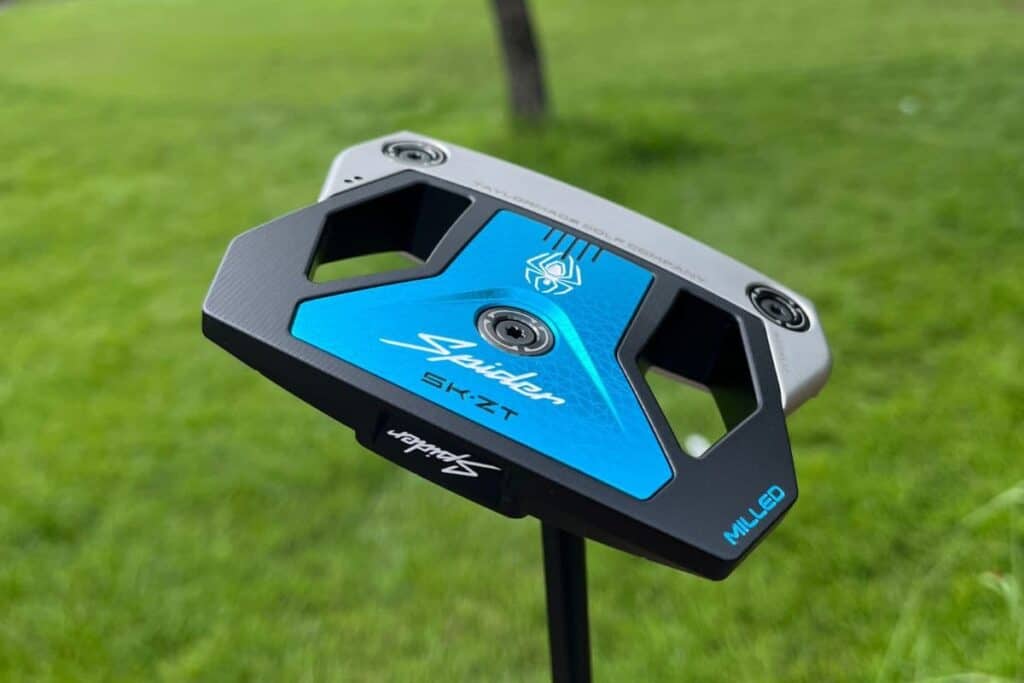
TaylorMade Spider ZT
TaylorMade’s Spider family already has strong “stable mallet” credibility, and Spider ZT is their angle on the zero torque category.
Official product page: TaylorMade Spider ZT.
Who often likes it: golfers who like the Spider look and want more face stability.
Common friction: feel/sound preferences and dialing in pace.
PXG Allan ZT
PXG’s Allan ZT is another prominent option, with a focus on stability and forgiveness.
Official product page: PXG Allan ZT putters.
Who often likes it: golfers who want a premium-feeling build with strong stability.
Common friction: as with any specialty design, you want to confirm aim and fit before committing.
Evnroll ZERO / FaceForward designs
Evnroll’s ZERO line explains its FaceForward approach and the “zero torque” concept directly on the brand site: Evnroll ZERO / ZeroTorque collection.
Who often likes it: golfers who want face-stability with a clear tech story and specific design intent.
Common friction: matching the look and alignment to your eye.
If you want a general buying roundup to compare more models in one place, Golf Monthly has a category guide here: Best Zero Torque Putters (buying guide).
Common Myths (Quick Debunks)
“It makes every putt straighter”
It can make your start line more consistent. It doesn’t automatically fix:
- poor reads
- inconsistent strike
- speed control
- setup/alignment errors
If you aim it two degrees left all day, you’ll miss left all day, very consistently.
“It cures the yips”
The honest answer: sometimes it helps, sometimes it doesn’t.
If your yips-like motion is tied to face anxiety and last-second hand manipulation, reducing twist can reduce the urge to “hit” the putt. That can be meaningful.
But if the yips are a deeper motor pattern or anxiety response, equipment alone isn’t a cure. It’s one tool, not a promise.
“Pros using it means it works for everyone”
Tour adoption is interesting, but it’s not a guarantee. Pros also:
- get precise fitting
- change putters constantly
- have elite speed control and green reading
It’s more helpful to ask: does it match your aim, your setup, and your miss?
Bottom Line: When to Buy, When to Pass, and What to Do Next
A zero torque putter is still a smart buy in 2026 when it solves a specific problem you actually have; usually face control under pressure, and when you’re willing to fit and test it like equipment, not like a lottery ticket.
Buy (or seriously demo) if…
- Your misses are mostly push/pull, not pace/read
- You feel handsy or tense on short putts
- You want a stroke that feels quieter and more repeatable
- You can get the basics fit (lie/loft/length) and test on real green speed
Pass (or wait) if…
- You already putt well and you’re mostly chasing novelty
- Your main issue is distance control and you dislike high-MOI feel
- You consistently aim mallets poorly
- You love strong toe-release feel and don’t want to retrain that sensation
Best next step: get fit / demo with your normal ball and green speed
If possible, do a short fitting session or at least a structured demo. Your goal isn’t to find the “best zero torque putter.” It’s to find out whether this category improves your start line without costing you speed.
Alternatives if you don’t switch (that still move the needle)
If you try one and it’s not for you, you still have strong options:
- Grip change (often the fastest way to reduce wrists)
- Alignment simplification (one clear line you trust)
- A traditional high-MOI mallet that fits your aim
- A basic check of lie/loft/length on your current putter
Sometimes the “fix” isn’t a new head. It’s making your current putter sit right so you stop compensating.