You step up to the tee feeling pretty good. Smooth practice swing, a clear target, maybe even a little tailwind. Then the ball starts left and peels hard right like it’s allergic to the fairway.
If you’ve lived there, or googled “how to fix a slice”, you’ve probably also searched “draw-biased drivers for slice” at least once, usually after the third OB slice in a row. And the big question starts to nag: is this a real solution, or just an expensive bandage?
The truth is calmer than the marketing and more helpful than the usual “just fix your swing” advice. Draw-biased drivers can reduce a slice for the right golfer. But they don’t change physics, and they can’t erase every cause of a slice.
This guide breaks down what draw bias actually is, how it works (heel weighting, upright lie, face angle, gear effect), what results are realistic, and how to test it before you spend money. You’ll also learn when it won’t work and what to do instead.
If you get this right, you’ll hit more playable tee shots with less stress and less second-guessing. BUT, if you get it wrong, you can end up with a two-way miss, a sudden hook, or a driver that looks “safe” but costs you distance and confidence.
What a slice actually is (and how it differs from a fade)
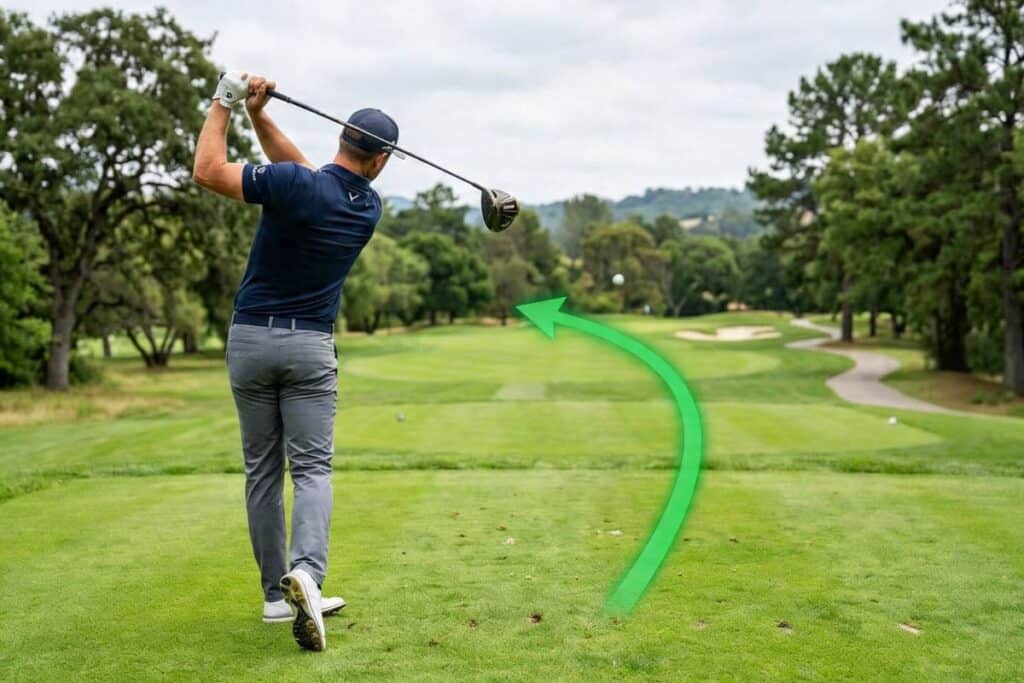
A slice isn’t just “the ball goes right.” It’s a big, uncontrolled curve (for a right-handed golfer, left-to-right) that usually starts left or straight and then keeps bending.
A fade is different. A fade is a controlled, smaller left-to-right shape that stays within your intended window, often starting a touch left and falling gently right.
Typical slice ball flight patterns and why it costs distance
Most slices share a few patterns you can recognize quickly:
- Start line left, curve hard right (classic pull-slice)
- Start line straight, curve right (often looks like a push-slice if the face is open to the target)
- High, spinny flight that floats and falls out of the sky
Distance loss happens because a slice usually brings extra spin and poor impact efficiency. You’re not just curving the ball. You’re often adding loft dynamically, glancing across the ball, and missing the center of the face.
What draw bias means in a driver
Draw bias means the driver is designed or adjustable in a way that encourages the ball to start more left and/or curve less to the right (for a right-handed player).
It’s not magic. It’s a collection of small design choices meant to:
- help the clubface return less open
- shift strike patterns toward impacts that reduce slice spin
- reduce the severity of a rightward miss
Draw-biased head vs draw setting on an adjustable hosel
You’ll usually see draw bias in two forms:
- Draw-biased heads (often labeled SFT, Max D, Draw, HD, or “anti-slice”)
These typically combine heel-side weighting, face-angle tendencies, and sometimes more offset. - Draw settings on adjustable drivers (hosel sleeves plus movable weights)
These let you change loft, lie, and face angle, and move mass toward the heel.
A draw head usually bakes the bias into the club’s DNA. A draw setting can get you part of the way there. Sometimes that’s enough, sometimes it isn’t.
How draw-biased drivers are designed to reduce a slice
Draw bias works by nudging two big slice ingredients in a better direction:
- Face angle at impact (more closed relative to the swing path)
- Spin axis (less tilt that sends the ball curving right)
Here are the main tools designers use.
Heel-weighted CG and faster face closure
Many draw-biased drivers move the center of gravity (CG) closer to the heel. That shift can make it a little easier for the club to rotate closed through impact for some golfers.
You’ll often hear this described as “helping the face close.” In practice, it means the head’s mass properties can slightly change how the club responds during the swing, especially if you tend to leave the face open.
Practical takeaway: heel weighting can help if your slice is mostly an open-face problem. If your path is dramatically out-to-in, it may not be enough.
Upright lie angle and start-line shift
Some draw settings make the driver play more upright. An upright lie tends to shift the start line more left (for a right-handed golfer).
That matters because many slicers don’t just curve it. They also start it in a place that makes the curve lethal. A small start-line change can turn “trees” into “rough.”
This is one of the most underrated tools because it can improve where the ball begins, even if the curve doesn’t disappear.
Face angle/offset and what you’ll see at address
Draw-biased drivers may sit a touch more closed at address, or include offset (where the leading edge is slightly behind the shaft).
Offset and a slightly closed look can:
- encourage a more confident release
- reduce the tendency to hold the face open
- help some golfers square the face sooner
But it’s personal. If a closed look makes you feel like you’ll hook it, you might steer the swing and create new problems.
Gear effect (toe vs heel strikes) and why strike location matters
Gear effect is often the hidden reason draw bias works for some golfers and not others.
When you hit a driver off-center, the head twists and the ball launches with a spin axis tilt that can add curvature. In simple terms:
- Toe strikes tend to create draw spin (ball curves left for a right-hander)
- Heel strikes tend to create fade or slice spin (ball curves right)
So if a draw-biased head helps you strike it a little more toward the toe, or at least away from the heel, you may see a real reduction in slice shape.
This is also why two golfers can test the same anti-slice driver and have totally different outcomes. Their strike pattern isn’t the same.
How effective are they? What you can realistically expect
Draw bias usually works in degrees, not miracles.
It can take a slice and make it:
- a smaller slice
- a playable fade
- a straighter ball that still isn’t perfect but stays in play
It rarely takes a severe slice and turns it into a consistent draw without any other changes.
There are also limits to how much stability can be engineered into a conforming head, since the rules cap driver MOI at 5900 g·cm² (with a 100 g·cm² tolerance) as described in the USGA Equipment Rules (Part 2, Rule 5).
When draw bias often works well (open face, not-too-extreme path)
Draw bias tends to shine if you:
- generally have a decent path, but the face is open
- hit a lot of shots that start okay and then bleed right
- lose the ball right mostly from face control, not massive over-the-top motion
- strike the ball toward the heel and need help moving impact more central or toward the toe
In these cases, small equipment nudges can create a surprisingly noticeable difference.
When it only reduces the slice (over-the-top / big out-to-in path)
If your slice is driven by a big out-to-in path (the classic over-the-top move), a draw-biased driver may help, but usually by reducing the damage, not eliminating it.
You might go from “two fairways right” to “right edge of fairway/first cut.” That’s still a win, but it’s not a cure.
This is where a lot of golfers get frustrated. They buy the club expecting a transformation, but the root is path plus face-to-path relationship.
When it can backfire (two-way misses, snap hooks)
Draw bias can backfire if you already have moments where you:
- flip your hands and hook irons
- hit a “good one” that turns into a left miss
- fight a two-way driver miss (slice on one swing, pull-hook on the next)
The same features that help close the face can sometimes close it too much when your timing changes.
So yes, a draw-biased driver can cause hooks for some golfers. Not because it’s “bad,” but because it changes the balance of your miss.
How to test whether a draw-biased driver will help you
You don’t need perfect technique or a full fitting to run a smart test. You just need a little structure.
Quick self-checks: start line vs curve, impact location
Before changing anything, answer two questions:
- Where does the ball start?
- Starts left and curves right: the face may be closed to target but open to path, or your path may be very left.
- Starts straight or right and curves right: the face is likely open to the target, too.
- Where do you strike it on the face?
Use foot spray, impact tape, or a dry-erase marker.
- Lots of heel strikes: expect more slice curvature.
- More center or toe strikes: you may not need as much draw bias as you think.
Impact location is the fastest reality check you can do.
Launch monitor signals to watch (face-to-path, strike, spin axis)
If you have access to a launch monitor (shop, fitting bay, or a friend with a portable unit), look for:
- Face-to-path: if it’s consistently positive (face open to path), that’s slice fuel.
- Spin axis or curvature numbers: you want to see the axis tilt reduce.
- Strike location or impact pattern: many systems show this, and it’s hugely informative.
You’re not hunting perfection. You’re looking for a consistent trend when you add draw bias: start line improves and/or curve reduces.
Simple range test protocol (before/after settings)
Here’s a clean way to test whether draw-biased settings work for you:
- Warm up normally. Don’t start the test cold.
- Hit 10 drives with your current settings. Note start line, curve, and your worst miss.
- Change one variable, not three:
- move weight to heel, or
- change hosel to more upright/draw, or
- add loft (which often closes the face slightly depending on the adapter)
- Hit 10 more drives.
- Compare:
- Did your average finish line move left?
- Did your worst miss get smaller?
- Did contact improve or get worse?
If you change everything at once, you won’t know what helped.
How to set up your current driver to reduce a slice (before buying)
If your driver is adjustable, you can often create meaningful draw bias without buying a new head.
Add loft or move to upright settings: what changes and tradeoffs
Adding loft can do a few useful things:
- often increases launch (helpful if you’re low or weak)
- can reduce slice tendency by improving face delivery for some players
- on many adapters, increasing loft also slightly closes the face at address (depending on how you sole it)
Tradeoffs to watch:
- too much loft can add spin and cost distance if you already launch high
- the closed look can mess with your confidence if you hate seeing left
Move weights to the heel (or Draw/Draw+ tracks)
If you have a sliding track or interchangeable weights, moving mass toward the heel is the most direct draw-bias adjustment.
This is often the simplest, cleanest change. You’ll usually notice:
- a slightly easier time turning the ball over
- less right-curving misses (if face or strike was the main issue)
If you’re the golfer who already fears the left side, do this in small steps.
If you use lead tape or aftermarket weights, make sure you stay within the rules and don’t create a non-conforming club, especially given the USGA Equipment Rules Interpretations on weight additions and conformance.
Consider shaft length and contact consistency
Many slicers don’t need more draw bias as much as they need better contact. A slightly shorter driver can:
- tighten strike pattern
- reduce heel strikes
- improve face control
You may lose a tiny bit of raw clubhead speed, but you often gain distance back through center contact and lower spin.
If your impact pattern is scattered, this can outperform any hosel setting.
Buying guide: what to look for in an anti-slice driver
When you see “best drivers for slicers” lists, you’ll notice the same themes: draw bias, forgiveness, and confidence at address.
Here’s how to think about it without getting lost.
SFT/Max D/Draw models and who they’re built for
Draw models are usually built for golfers who:
- miss right as their dominant pattern
- benefit from help squaring the face
- want a higher-launch, more stable feel
- prioritize keeping it in play over shaping shots both ways
They are not beginner-only clubs. They’re miss-pattern clubs.
Forgiveness (MOI) vs workability tradeoffs
High forgiveness (high MOI) tends to help on mishits, especially on heel and toe strikes. Many draw-biased models pair draw features with high-MOI designs.
If you want a clear explanation of how MOI connects to stability and off-center performance, GolfWorks breaks it down in this guide to how moment of inertia (MOI) affects driver playability.
The tradeoff is that extremely stable, draw-biased heads can feel harder to work intentionally. For most slicers, that’s not a loss. It’s relief.
Why fitting matters more than the label
Two drivers can both say “Draw” and perform totally differently for you because:
- shafts change delivery and face-closure timing
- loft affects launch and spin and sometimes face angle
- your strike pattern may change with the head shape and sound
Even a simple store fitting where you test neutral vs draw with the same shaft can save you a lot of guesswork.
Draw-biased driver vs neutral driver: who should play what (and why)
This decision is really about your most common miss.
Choose draw-biased if:
- right miss is frequent and costly
- you want more left start line and less right curve
- your best shots are straight or small fades, but your bad ones are big slices
Choose neutral if:
- your miss is already two-way
- you already hit draws or hooks sometimes
- your right miss is more of a soft fade than a slice
A neutral driver can still be forgiving. It just won’t actively steer your pattern left.
Should you fix your slice or buy draw-biased clubs?
You don’t have to pick one forever. You can choose what helps right now and still improve over time.
Use cases: quick help, physical limitations, keeping it in play
A draw-biased driver can be a smart move if:
- you need playable tee shots for league, trips, or weekend rounds
- you’re rebuilding confidence after a long slice streak
- you have mobility limitations that make certain swing changes unrealistic
- you’re already working on your swing, but you want the course to be fun again
Sometimes keeping it in play is the difference between practicing more or avoiding the driver entirely.
Use cases: long-term fix, big swing-path issues
Lessons or focused practice should move to the top if:
- your slice is extreme and constant
- your start line is consistently far left (pull-slice) with huge curve
- you can’t find the center of the face
- you’ve tried draw settings and nothing changes
That’s usually a sign the main issue is path and face-to-path, not equipment.
A useful middle path is using a draw setting to reduce punishment while you work on one simple change, often grip, setup, or a single feel for path.
FAQ: fast answers to common draw-bias and slice questions
Can a draw-bias driver fix a slice?
It can reduce a slice, and for some golfers it can turn a slice into a playable fade. If your slice is mostly an open face and/or heel strikes, draw bias can be a noticeable help. If your path is dramatically out-to-in, it may not be enough on its own.
Do draw-biased drivers really work?
They work best when they match the reason you slice. Draw bias helps with face-closure tendencies, start line, and strike-related curvature (gear effect). It won’t override a severe swing-path issue every time.
Does heel weighting actually make the ball draw?
Heel weighting can encourage a face that closes a bit easier and can shift your strike pattern. Combined, those can reduce rightward curvature. The effect varies by golfer, especially based on strike location and face-to-path.
Is an offset driver a good idea for a slice?
Offset can help some slicers square the face and feel less “late” at impact. But if you already fear the left side, offset can create tension and steering. It’s a feel and confidence test as much as a technical one.
Should slicers use more loft or less loft on a driver?
Many slicers do better with more loft, because it can improve launch and sometimes reduce low-face contact that adds spin and curve. But too much loft can increase spin and ballooning. The right answer is the loft that gives you playable launch without excess spin.
Can a draw-biased driver cause hooks?
Yes, especially if your swing sometimes delivers a closed face already, or if you release hard and get flippy under pressure. If you start seeing snap hooks, reduce the draw setting, return weight toward neutral, or consider a neutral head with more loft and forgiveness instead.
Fade vs slice: what should I aim for?
A fade is a controlled shot shape. A slice is an uncontrolled miss. If you can turn your slice into a small fade that starts on a smart line, you’ve made a huge jump in real-world scoring.